Showing posts with label Mark Dayton. Show all posts

Friday, October 31, 2014

Who Is The Star Tribune's Suki Dardarian? Part 2

For lack of a better term, I would say the feminine values are now the 
values of America, sensitivity is more important than truth, 
feelings are more important than facts.
--Bill Maher

Suki Dardarian is a past president of the Associated Press Media Editors (APME). This professional association might well qualify as the most sclerotic in existence. A quick check of its web site reveals it hasn't updated or modified its Statement of Ethical Principles since 1994. It's understandable, I suppose, given how rarely journalists are ethical.

Remember, before being welcomed by the liberal media borg extant in the Twin Cities, Dardarian lectured that ethics was the single most important quality anyone wanting to go into journalism could bring. It appears this is a one and done type thing in her world, a world of checklist boxes to be tic'd so as to verify that you are indeed sensitive, warm and inclusive by covering, at least once, those subjects to which the checklist boxes apply.

Liberals themselves are the ultimate social construct.

Dardarian's Twitter feed is nothing exceptional; it has a feel of duty about it until a real life friend punches through and a person emerges from the self-conscious newspaper manager. Otherwise it's the usual menu of stories from her own paper and other media outlets. A thoughtful person will rarely find anything thoughtful for them to click on in her feed.

Who Dardarian follows on Twitter exemplifies what someone who thinks news is "curated" would follow. This is why you'll find both the Heritage Institute account as well as the usual give aways, like Valerie Plame. You wonder if Dardarian even knows who Richard Armitage is?

What's interesting, though, is that Dardarian appears not to know how to use Twitter in any conversant sense and this is confirmed by her subscribing to only one public list: food trucks.

I swear I'm not making that up. Private lists exist so perhaps she has subscribed to several of them. Something tells me no, however. For someone who was supposed to have had large digital responsibilities, Dardarian's social media presence appears to be a flat circle of time.

* * * * 

She can, however, live tweet events when needed, as she did when she attend the 2014 APME conference in Chicago earlier this year. Membership is limited to those who hold senior positions of management in newspapers. The tweets were instructive. #Editors2014

For instance, we learned: "many news organizations don't really know what engages their readers." How odd. 

Then again, it's been said that journalism is the only business where the owners don't care what the customers think of their product. Eat the dog food.

We also learned in Chicago that Voxdotcom is "smartly starting to rewrite news media ecosystem rules." This sort of jargon means nothing but doubtless the attendees ate it up. Voxdotcom is a laughing stock on and off Twitter, with a horrible factual track record and almost daily corrections. Yes, American media, Ezra Klein is your answer. 

Finally, one got a sense of media's unwarranted self-importance and post-graduate abuse of language when one speaker said "We must ask, what is the promise of this collection of words?" Promise? Like life after death? For starters, how about: are the words accurate and free of bias? No, apparently the question is the promise. Of this collection of words. That no one will ever remember. 

* * * * 

About a month after being in the new but same job at the Star Tribune, Dardarian was interviewed by Scott Faegerstrom, which resulted in two separate, very good articles written by him for MinnPost. In them, we learn that she has cred because of the Pulitzers won by the Seattle Times and being past president of APME; the coins of the newspaper realm. 

Job one for her will involve "public service journalism." That's essentially another word for liberal agitprop but cosseted in the virtue of service. It isn't news reporting and it isn't even journalism, if such a thing still exits. Faegerstrom notes with approval that Dardarian is a woman because the week prior to the interview Jill Abramson of the New York Times had been fired and this, he notes, "aroused such ire." 

Why yes, women can't be fired when they screw up. Nor can blacks, latinos, asians, gays, lesbians, atheists or any other atomized demographic in the ridiculous worldview of liberalism. Abramson was fired because she was a bitch and couldn't work with people, as New York Times' sources put it anonymously. These are certified, tedious, New York City liberals making such comments, mind you. The reflexive support for her among the wider media simply because she was a woman underscored again how easy it is to be a liberal: stop thinking critically and go with the herd of individuals. 

Faegerstrom quotes one journalism professor as noting how similar Seattle is to Minneapolis and the lack of any challenge in moving professionally from one to the other: "I think this will be a very smooth, quick entry for her." But the game is given away when that professor says "It isn't like she's parachuting into Texas." God forbid. That would require real change and real diversity; she might even learn something new. Keep it comfortably numb, please, in Minneapolis. 

* * * * 

It's not news that newspapers are dying. Approximately only a third of Americans under the age of 35 look at a newspaper even once a week. Lately I've seen liberals I follow on Twitter tweet pictures of different sections of the Star Tribune and I'm always shocked at how thin and awful the pages look. Whatever the opposite of reading is, it invites it. 

Recently, Robert G. Kaiser wrote a piece called "The Bad News About The News." Kaiser spent more than half a century at The Washington Post as a reporter and editor. Journalists too often attach themselves to media outlets like barnacles; MPR, NPR and "public" television have disconcertingly large numbers of lifers. Can you imagine looking back over a career of such vapidity? 

At any rate, Kaiser laments a number of things about the current travails of newspapers. Craigslist wiped out the classified ad revenue (which 20 years ago accounted for more than a third of WaPo's revenue!) and circulation plummeted at the same time for a variety of reasons. He deserves credit for being forthright: "Despite two decades of trying, no one has found a way to make traditional news-gathering sufficiently profitable to assure its future survival."

At seventeen quickly read printed pages, I recommend the piece if you're at all interested in newspapers, journalism, the media and its collective future. You can do so by clicking here.

Of course Kaiser remains a creature of his time and of his intellectually monochrome mind, like most in media. He talks about the time before "digital technology" changed the world, noting that "the news was quite orderly and predictable." Well yes, Robert, wasn't that part of the problem, predictable news? And isn't putting it that way avoiding the unpleasant truth that elites, almost always liberal, suffused reporting with their many biases? It is. He goes on to observe that "[t]his small, nearly-closed world rarely provided any surprises." Quite.

In what for me was a moving passage demonstrating the power of intellectual blindness, if not bankruptcy, Kaiser asserts calmly that for "nearly four decades after World War II, mainstream journalism was notably non-ideological." No serious observer of media now, or any historian of modern media, would make such a statement. These creation myths of present day media are important to the Woodward & Bernstein generation of journalists who are reaching the end of their days. WaPo's Ben Bradlee recently died, a totem of not only an age gone by, but, for people like Kaiser, one that never really existed except in their minds. Everything passes and it is with that awareness one should be compassionate in assessing that generations' colossal media failures. 

* * * * 

It's virtually impossible to notice any change to the quality, tone, tenor and embedded bias to most Star Tribune reporting in the time since Dardarian arrived. This is a function, I believe, of both the bland sameness of reporters and employees there (including a batch of new reporters, all uniformly liberal and of widely varying talent) as well as her limited time as managing editor. She did, however, in the video interviews I linked to in part one of this topic, say that she believed a goal of good journalism was "to raise hell a little bit." 

I've searched but can find no evidence that Dardarian has done such in her career. Consequently, and at no charge, I thought I'd offer some hell raising suggestions for her to pursue as a government watchdog, brave speaker of truth to power and teller of stories that enrich the community:
  • Is Gov. Dayton mentally well enough to govern for another four years? Is he on any medications for mental illness, what are they, at which dosage levels and is he under the care of a psychiatrist?
  • Can the Governor hold a valid driver's license? Does he? If not, why not?
  • Have you ever suggested embedding a reporter, such as they are, to see if Dayton can manage a forty hour work week? 
  • If Tina Flint Smith is the functional governor of this state, which many in local media tell me is precisely the case, why would you not explore that in depth? 
  • Is there substantial public corruption among black politicians and black community activists that guilty white Twin Cities liberals are afraid of investigating aggressively?
  • Why such reticence to understand what caused that building in Cedar Riverside to explode? Hint: it wasn't a gas link.
  • What is the source of increased violence in Minneapolis? Why in a metropolis filled with earnest education liberals would there exist the nation's worst achievement gap? What isn't being looked at? 
I could go on but there's no need. For any inquisitive journalistic mind there wouldn't be enough hours in the day to cover things that would "raise hell a little bit." 

To make it hit home, why not a feature on whether your boss, Rene Sanchez, executive managing editor, is a white hispanic? That's the term the New York Times invented and applied to George Zimmerman to keep a white/black race narrative going. As a friend noted, by that logic President Obama is a white black. Welcome to your own world. 

Better yet, how about a series on the enormous violence between blacks and hispanics? What are its sources and what are its possible remedies? I realize your problem: this discussion of racial strife leaves out whites so of what possible use is it to the media?

* * * * 

The internet destroyed the liberal media monopoly that Robert Kaiser fondly recalls and which is missed daily by Social Justice Warriors in today's media. Matt Drudge running the spiked Michael Isikoff story on Monica Lewinsky & Bill Clinton was a watershed from which there was no return. 

Media bias could no longer hide and its agents no longer be seen as anything other than that which most are: democrats with a by line. It's only going to get worse, by which I mean not Lenin's imperative--the worse the better--but worse for a media that won't adapt to the new journalistic age and new expectations of honesty and fairness.

Before he died Andrew Breitbart called the media evil. It took me a long time to understand that he was right. But there was nothing else to call them when an NBC producer deliberately altered the audio from George Zimmerman's 911 telephone call to make him appear racist. That producer still works in television. 

The new journalism, the bloggers, the online start ups, the falsehood destroying power of Twitter, all this reminds me of what, years ago, was said by the critical legal studies movement's Roberto Unger about the legal education establishment. His words seem to me today, however, to apply more exactly and fully to citizen journalists against the media ancien régime:

"When we came, they were like a priesthood that had lost their faith and kept their jobs. They stood in tedious embarrassment before cold altars. But we turned away from those altars and found the mind's opportunity in the heart's revenge."

©2014 John Hugh Gilmore & Minnesota Media Monitor™ All rights reserved.

Photo credit: Suki Dardarian, Twitter.

Monday, April 29, 2013

What I Saw At The Minn Post Roast


Last Friday evening I attended the MinnPost Roast 2013 as the guest of former republican Senate Majority Leader Amy Koch. Koch is both a friend as well as a client. She was one of several individual and ensemble acts that performed throughout the night. As republicans there was something of the "in the belly of the beast" feel to the evening but nothing that wasn't able to be surmounted by good will and a sense of humor. The evening couldn't have been better if I had learned Israel bombed Iran.

Koch had humor in spades. Going onstage relatively early at the Pantages Theater in downtown Minneapolis, she was effortlessly unselfconscious and completely hilarious. People might say I'm not objective about this because we are friends but I have many friends about which I've remained objective, including in a public way on this blog. Koch, as I tweeted that night, brought down the house with her funny, perfectly pitched routine which she wrote herself. She alone out of everyone who appeared onstage that night did so without notes. People know when they are in the presence of a natural and last Friday night the elite of the DFL knew it as well, many not for the first time. I consciously but at times with difficulty pushed away thoughts of "what if" and stayed in the moment.

Other DFL politicians and activists performed and I found myself smiling at them and otherwise having something of an out of body experience. Sen. Franken was but two seats away; he was oddly flat onstage and tethered to notecards he seemed to be racing to get through. I did manage to get a nice picture of him & Koch, though. Sen. Klobuchar was quite self-deprecating to my mind but I know her personally not at all. Minneapolis mayor R.T. Rybak performed well as did St. Paul mayor Chris Coleman, each with their very different demeanors but both being themselves and enjoying it. Governor Mark Dayton came on toward the end of the show, together with his press spokesman Katie Tinucci and did a perfectly adequate job of speaking a few lines while Tinucci essentially performed--quite well--a one woman show.

The after party at the Chambers Hotel was equally fun, giving us more time to visit with the loyal opposition. We happened upon Tom Horner and Jim Graves which proved amusing in an altogether different way than the stage show. Graves took a sudden, strong interest in me when I located myself in the political firmament by saying I was Andy Parrish's attorney. He asked to have lunch, instantly pressing his card into my hand. I look forward to it but am wistful about what is surely a downward slide in my fortunes: trafficking in Andy Parrish's reputation. On the upside, if you can't have good food at lunch with Jim Graves you can't have it anywhere in the Twin Cities.

We also had an opportunity to visit with former Sen. Ember Reichgott, a frequent commentator on local Twin Cities political news shows. She was as pleasant and nice in person as she appears to be on tv and radio. In passing she expressed admiration for Brian McClung recently coming out in support of same sex marriage and termed it courageous. She was fascinated when I said I didn't think taking such a position now involved much courage. Other republicans had done so when it was risky--Jake Loesch is probably the best example--and then, some time after, came Sen. Branden Pederson and Pat Anderson. I said taking a position in favor of traditional marriage was now the courageous thing, given the shower of praise from media any given republican receives for supporting same sex marriage. She believed me, believed I was serious in my observation but was struck nonetheless.

What must Reichgott think of my party, I wondered after our discussion ended, moving further amidst the beautiful people dressed mostly in black? Is it all Torquemada all the time? Does she think there's a certain suffocating orthodoxy imposed and from which deviations are acutely punished? We all understand the stereotypes of both major parties. What was striking to me was that as sophisticated an observer of the scene as Reichgott was surprised by a not particularly surprising revelation of how things actually are in the Minnesota Republican Party. How off base, then, am I and many others about the DFL? Maybe we need to get out more together? Within reason, naturally.

We don't, though, and there's the problem. Republicans are routinely sought for the Minn Post Roast and its organizers have great difficulty finding any. Yes, Minn Post is filled with a lot of retired Star Tribune and Pioneer Press employees but our absence isn't going to do anything to help them think about issues (or republicans) somewhat differently. Schmoozing isn't going to change policy positions; it might help us understand each other better and on our own terms, the best kind of understanding.

I thought the same thing when the week prior I attended the Minneapolis-St. Paul International Film Festival to watch Mira Nair's movie adaptation of the well regarded book by Mohsin Hamid "The Reluctant Fundamentalist." Screen after screen of sponsors were shown before the movie began. Not one of them was remotely conservative. What, the Freedom Club couldn't have sent $500 to get a spot?
It's not that hard; the bar is very low. Still we republicans fail.

The point is that by ceding so many fields we play on very few and increasingly just to ourselves. Democrats do that to some extent but to the degree the larger cultural arena is friendly to them (if not owned outright) our absence becomes a self-fulfilling prophecy of increasing marginalization.

Minn Post deserves congratulations on putting together a splendid evening of fun and enjoyment. Perhaps next year, instead of one talented, brave, and delightful republican on stage, we could provide several. Doing so would surprise both sides of the aisle.


Sunday, September 16, 2012

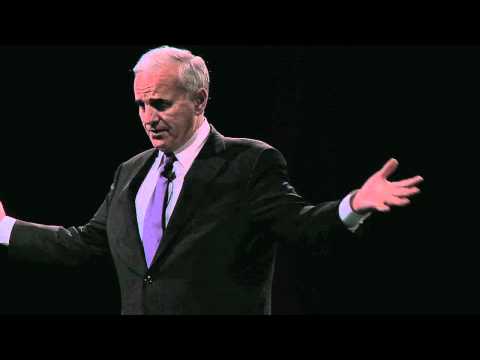
The Unbearable Lightness Of Gov. Mark Dayton


Why is it some children of enormous inherited wealth react to their condition by inflicting themselves upon the greater public under the misnomer of public service? If quizzed, none of us would recall asking these strange creatures for any assistance that they, by chance, might possess in governing ourselves. No, we're good, thanks.

Were that it was so easy to stop them. Minnesota's misfortune is to have had Mark Dayton insist that his destiny lay in such oppressive public service on our behalf. First he acted out on the national stage as a senator and failed as only such a hot house creature could. After his single term of absolutely no consequence (hint: that's called waste) some of us had hoped he'd do the "I want my own vineyard" bored wealthy thing or perhaps gotten involved in artisanal chocolate production. For those who main goal in life because of wealth is not to feel irrelevant, the possibilities were endless. Could he not have glommed on to Bill & Melinda's feel good social experiments? Surely from among the panoply of useless United Nations programs and causes there was one he could internalize? If it were sheer ego, why not freshen up a salad dressing line with his mug on the bottle and give Paul Newman a run for his money? He could have meetings and everything!

No, not our luck. In what had unavoidable masochistic overtones, Dayton decided he wanted to act out on the state level (again) by insisting he was governor material. That he won the office is no proof whatsoever of that premise and to date his performance is irrefutable evidence of its lack. He jammed his own party by running in the primary and using his own money. Either or both of these conditions usually elicits the loudest of clucking from democrats but, after Dayton beat Tom Emmer by a 8,000 vote whisker, they soon enough fell in line. The governor could be managed, they were told.

Gov. Dayton's first two years have been abysmal. What was it he wanted to do as governor anyway? Wouldn't a house and senate controlled by republicans offer him the perfect opportunity to lead? To show compromise? To get things done as these political types like to pretend they can? If one was a real leader instead of a lost soul looking for external housing to shore up the inner, yes. But a leader is not who Gov. Dayton is and it is not who he will be in the coming two years, either.

Last week the Governor, sounding like a vaguely fascist mandarin, simply insisted without any intellectual depth or sustained engagement that taxes must increase because of his perceived need of all that government must do. His idea of the size & scope of government is not open to discussion. There is no opting out from it because he knows best. What's that called again?

He made his statement at what, until just yesterday, I had been led to believe was simply a speech reported on by the press. Instead, as MinnPost reported the day before (as did the Pioneer Press), it was a University Lecture. MinnPost polished the knob by saying that the title "university lecturer" could be added to Mark Dayton's resume. No, really.

Yet what shocked is that this was a lecture grandly titled: "Minnesota's Future: Challenges and Opportunities" given to the University of Minnesota's Humphrey School of Public Affairs Policy Fellows (there's more intellectual diversity among supporters of Ron Paul by orders of magnitude; the Fellows are the stuff of David Mamet's nightmares). This was a liberal/progressive/left confab with Little Lord Fauntleroy in attendance.

But wait there's more! The event was closed to the public.

Pardon? Is this possible? Is Common Cause Minnesota on it? From whence shall our help come? Surely the event was taped and surely I will get my hands on it. Try making it private. The entire speech and question and answer session should be posted on the Humphrey School's website without delay. This event was not a private function.

Why would the press acquiesce in this? Access? Or just the usual hot dish politics? Both?

I listened to the audio of the Governor's 25 minute speech. It is appallingly bad. To learn only after the fact that it was a university lecture proper for a set of fellows was mind boggling. He spoke from notes as best from what I could tell. Meandering, at times pointless, at others a non-sequitur minefield, his speech revealed that there is serious trouble with our Chief Executive.

Our Governor's visual performance at this public event is what is being deliberately withheld from the public. What an odd thing to say about Minnesota politics.

But if the visual matches the audio, voters may well be in for a shock. Listening to several bizarre passages on the audio, none intrigued me more in wanting the visual as when Gov. Dayton spoke about his family's annual gathering to discuss wealth management. He reminisced about advice concerning the public good from his father and uncles. He's still executing orders from childhood! I wanted to clap my hands together loudly to snap him out of it while listening to this psychological excursion.

MPR and the StarTribune failed to note that this was a resume enhancing "university lecture" before the Humphrey School Policy Fellows with the President of the University of Minnesota in attendance. MinnPost stated that "Some media may attend, but it's not open to the public."

Do you see? People like us are not allowed in. Media, who are liberals by another name, "may attend." In other words, no one here but us squishes and we squishes will report on it. Media criticism can't possibly be this easy in this town, can it? Because I'll become quickly bored.

It's telling that media do not consider themselves the public. Has this ever been said before? Remember, these people think exceptionally highly of themselves and as having a combative posture toward power. What a laugh! In fact, if power flows from their favored party, they are eager to be co-opted and, as their publishing shows, used to advance that party's interests.

The StarTribune reported only that Dayton spoke "at the University of Minnesota." Not untrue and therefore meets the StarTribune's low threshold for accuracy and completeness.

MPR reported that he spoke "to a group" at the University of Minnesota. Also not untrue and apparently reported this way less any MPR listener assume that the Governor was walking around campus talking to himself.

The Pioneer Press was fuller, saying that the Governor gave "a speech at the University of Minnesota's Humphrey School of Public Affairs." Even that, however, was insufficient to convey the importance of the event to its own participants. Minnesota University President Eric Kaler attended the Governor's Lecture to the Humphrey School Policy Fellows. Indeed he should have: it was a very big deal.

"Some media may attend, but it's not open to the public." Remember that phrase.

In his so-called lecture, the Governor proclaimed that the failure to raise taxes would be the death of this country. Failure to raise taxes would be the death of this country. I swear you can hear the sounds of bobble heads on the audiotape. Revenue or death!

How is this relic our Chief Executive? He called raising taxes an acid test of his. Could anyone in the press appreciate how astonishing that truly is?

Not really. The introduction to the story in the Pioneer Press started out: "Count on Minnesota Gov. Mark Dayton to swim against the tide."

Really? That wet a kiss?

The StarTribune wrote that Dayton had come back from a summer of silence "roaring." There's a neutral term. Fact check, please. It also wrote that the Dayton-responsible statewide government shutdown last year was "bruising." Actually, no one noticed the shut down very much (myself I felt filled with more liberty) which led to Dayton's capitulation 20 days later to the republican legislature's budget. But it is "bruising" now because an election is upcoming and that's how democrats want the issue colored. Consider it done!

"Some media may attend, but it's not open to the public."

Dayton is wildly out of touch with the times across this country. Where has he been since 2008 for him to have said that "public investments do create jobs." Is there even a flicker of a brain wave there? They create jobs but the wrong kinds of ones and even then frequently they don't last. Public investment does not equate to economic growth. This fundamental economic principle is exceedingly difficult for liberals to grasp because spending makes them feel like they are doing something. That their policies fail so routinely and disastrously without another thought also keeps liberals from holding themselves to account. Detroit is the physical manifestation of liberalism. Imagine if that city came to the end it has under republican governance. Democrats with a byline, as Rush Limbaugh called the media, would be all over that important story.

Did anyone get the chance to ask Gov. Dayton if he'd chatted up fellow democrat Gov. Andrew Cuomo about his work in New York state? It's an open question whether he'd take Dayton's call but that's another matter altogether. Has our governor heard of reformist democrat governors? We seem to have a leader who is intellectually uncurious about whether anything on the policy side may have changed since he first got into politics just yesterday in 1975. Are his handlers equally thick? Perhaps it's all one encompassing bubble? I hadn't considered that before.

Besides taking money from you in the amounts that he knows best in order to spend it on your own good, Gov. Dayton last week also disassociatively proclaimed he'd like to open trade with Cuba.

What? No, just no Governor. What are you thinking? You're aware you're in 2012, aren't you sir? Minnesota is surrounded by vastly more economically vibrant states. You may have heard of something called a boom (but not a firework so relax) in North Dakota. South Dakota has been siphoning jobs and businesses from Minnesota for decades now. Wisconsin? You know, Gov. Scott Walker who you are so very not?

How does our Governor bring nothing to the table of ideas but stale, failed ones? The laziest of postures are being struck. This begs the question just who are the Governor's current handlers? Who actually is part of the process that informs him as to what he thinks is good governance? We don't really get much coverage of that important and interesting subject. The lecture to the Humphrey School Fellows was just such an opportunity and therefore went largely unreported.

There was, fortunately, a ukulele player on Almanac last week so our media didn't let us down completely.

Eric Ostermeir, blogging at Smart Politics, had a fascinating overview of the dark, strange, paranoid, apocalyptic words the Governor used in his speech. Is this how liberals make themselves feel alive? More alive? Purposeful? (I feel assaulted when that word is used.)

The article is not lengthy but it is extremely observant in distilling Gov. Dayton and his performance last week. To read it click here.  It's almost as if Eric is onto something. Like a story.

It's telling that Gov. Dayton has nothing but exaggeration and the gloomiest of language with which to go into this fall's election. Grounded optimism requires a leader. General "can do" attitude usually works wonders with people. But this strangest of all Minnesota governors has no capacity whatsoever for that which smacks of the positive. To the contrary, his internalized conflicts leave him continuously searching for solutions which he then projects onto us by way of out of touch, top down, diktats whose implementation gives him psychological satisfaction. Of course that last bit was sheer psychoanalysis but wasn't it fun?

The reporting, as it were, suggests that democrats will increasingly use Gov. Dayton as legislative races heat up. I hope they're correct about the upside offsetting the down because this governor is the best reason why the DFL shouldn't get the legislature. Making him your poster child is fine with me. But having Gov. Dayton urge voters to increase taxes by voting democrat may not be the best way to get said votes.

Perhaps democrats didn't notice there's no shortage of issues with which to run against Minnesota republican legislators. But the lemming instinct is strong among progressives; when your ideas are weak continuous mutual reassurance they are strong is essential. What cliff? Forward.

If the Governor wants to make raising taxes the "acid test" of this election, it's an open question whether democrats can deflect that mistaken approach with something more likely to bring them to a majority in either chamber or, God forbid, both. I don't pretend to know the inner workings of the DFL, its legislators or activists and so can't hazard a guess as to which is more likely to win out.

I do know if it's a battle over raising taxes to fund more useless government, republicans will have the upper hand consistently across all legislative races. Why Dayton is channelling Walter Mondale's 1984 convention promise to raise taxes I've no idea.

I do know that it didn't work then and it won't work now.